
What do you really know? Is there one topic or maybe a few that you really know about? And not just that you possess the ability to improv an argument and use rhetoric to dress it up. That is a skill most of my friends have, but it doesn’t have much day-to-day utility outside of a classroom. It is super important and sharpening your arguments and verbal communication is great. But only when using evidence and as close to facts as we can get. To do that you need a certain level of Hard Knowledge. Concrete, real, indisputable. To avoid “BS-ing” and subjectivity in the face of “right or wrong” problems and explanations. Because subjectivity can yield very great arguments, discussions, insights, novels and art. But in the hyper-political era we are in, subjectivity is getting exhausting (this is just my subjective opinion). I have been increasingly interested in objective Hard Knowledge. Keep in mind most things, including scientific facts, that we conceptualize as true are simply our current best answer. Science is not certainty, certainty is antithetical to the spirit of Science, which is the spirit of discovery and self-doubt. Yet still, Hard Knowledge (and good Science) works. In so far as we can make or predict things based on the knowledge, it is fact. So let’s explore this kind of knowledge. If your kid asked you “Dad, why do we put gasoline in the car?” could you give an answer using physics and not just “it gives it power!” This task is normally a lot harder (and rewarding) than memorization.
I was walking with my younger sister last night when we started talking about different types of energy sources (fossil fuel, hydroelectric, nuclear…). We were talking about how burning coal actually can be used for electricity and her curiosity reminded me exactly how I felt a year or two ago. She really wanted to know, like she’d been denied the right to know all this time and only now realized it. We all use electricity every single day, but I (and I suspect most of you) had no idea how it worked. I favored renewable resources theoretically, but didn’t even know how sunlight can replace fossil fuels. How do dead animals power my home? How could sunlight make my iPhone charger work?
I didn’t know before I intentionally tried to learn, and it took about two hours of sifting through new tabs of different Youtube videos and Wiki pages. So here is the fascinating hard knowledge of how Solar Power and Thermal Power work and the hurdles to making Solar our primary source of energy. Before reading on, try seeing how much you actually know. I find when reading I often just nod in agreement uttering “duh, yeah…yeah exactly” without actually knowing before hand.
Let’s start with the main way we currently get our energy: coal (over 50% of our electricity). The first thing to know is that Energy has many forms. There is Kinetic Energy of motion, Potential Energy (like a ball on top of a hill), Chemical Energy (in food) and many others. The kind that matters to our current energy uses is Thermal Energy. This is the energy generated through heat. It is sort of the simplest form of energy to make or at least to understand. We make it by burning material, like coal, and converting the Chemical Energy within the bonds of that material to heat. Then using that heat, we typically turn water to steam. Steam can generate lots of pressure which can move turbines. Then capturing the energy from moving things (Mechanical/Kinetic Energy), we make electricity. The essential step is converting the Mechanical Energy into electricity. This is done by a generator.
Generators use magnets to create electricity. Always remember, electricity is just moving electrons (kind of…). By spinning a piece of metal inside of a magnetic field, you can create moving electrons and thereby electricity (a motor does the opposite, using electricity to make things move).
This is the field of Electromagnetism and it is super complicated (to me) and very interesting (to me). Before James Maxwell, electricity and magnetism were thought of as two separate physical phenomena, but Maxwell provided the insight that they are like two sides of the same coin. Magnets can make electricity, and electricity can create magnetic fields. A generator capitalizes on this connection, using magnetic fields to make electric fields.
So we can use steam to move turbines and use generators to make electrons move. These electrons moving are what we call Current. By moving the electrons through a metal wire, they generate heat. The heat can either create light for your lightbulbs or heat for your stove. This how most people get their electricity today. Let’s look at the obvious downsides of Thermal Energy and the benefits.
Upside:
1.) Coal is super abundant. In the US, 38 states have coal. Coal is basically the Carbon from dead plants and animals in wet areas compacting into organic rock.
2.) Infrastructure is already there. A pretty bad reason which equates to “we’ve always done it this way…”
Downside:
1.) Burning coal creates tons of pollution.
-Sulfur Dioxide is the main source of acid rain. Although many plants use Sulfur “scrubbers” to greatly reduce the Sulfur pollution from Coal plants.
-Nitrogen Oxide is the main cause of Smog and a contributor to acid rain. Smog is not only bad for asthma and lung conditions, but has also been linked to cancers.
-Carbon Dioxide emissions. We all know about this. Each year 3.7 million tons of CO2 are emitted from coal plants, which are trapped in the atmosphere and then trap heat from escaping.
-Benzo Pyrene, a Hydrocarbon present in air pollution and cigarette smoke, has severe health affects. It has been shown to severely affect memories and learning in rodents, damage the immune system by decreasing white blood cell concentrations, and it binds to Guanine severely disrupting our DNA which explains the link to cancers.
2.) Coal plants are limited in efficiency by the Rankine Cycle of steam generation. Right now coal plants have capped at an efficiency of 33%, this means that for all the energy used at a plant to make electricity, only 33% is returned and viable for use. Additional limits of efficiency are the result of having to move the energy from central plants all across the US. Tons of energy is lost on that journey.
3.) Playing the long game, we will eventually run out of coal. It takes millions of years to create useable coal from dead organisms.
Now that we understand Thermal Energy and fossil fuels, let’s examine Solar Energy. The first thing to know is that we have known about the photoelectric effect (turning light into electricity) for a long time (nearly 200 years). It isn’t a super new idea. In fact, almost all other forms of energy generation (except nuclear) originate as solar energy. By this I mean, the sun was the original source of the energy used. For example, coal wouldn’t exist if living things didn’t get their energy from the sun. This is the energy used by burning coal. So a cool thing about Solar is we go directly to the source, not a million year old middle man.
Another benefit is the inherent decentralized nature of Solar Power. Most forms (like the coal plants we looked at), use a centralized plant and then hundreds of miles of wires to move it from the central plant to others (the Grid!). But Solar Power doesn’t need to be centralized, each home or business can have their own mini-grid. This is called distributed power. So tyranny fearing conservatives should be all for Solar Power.
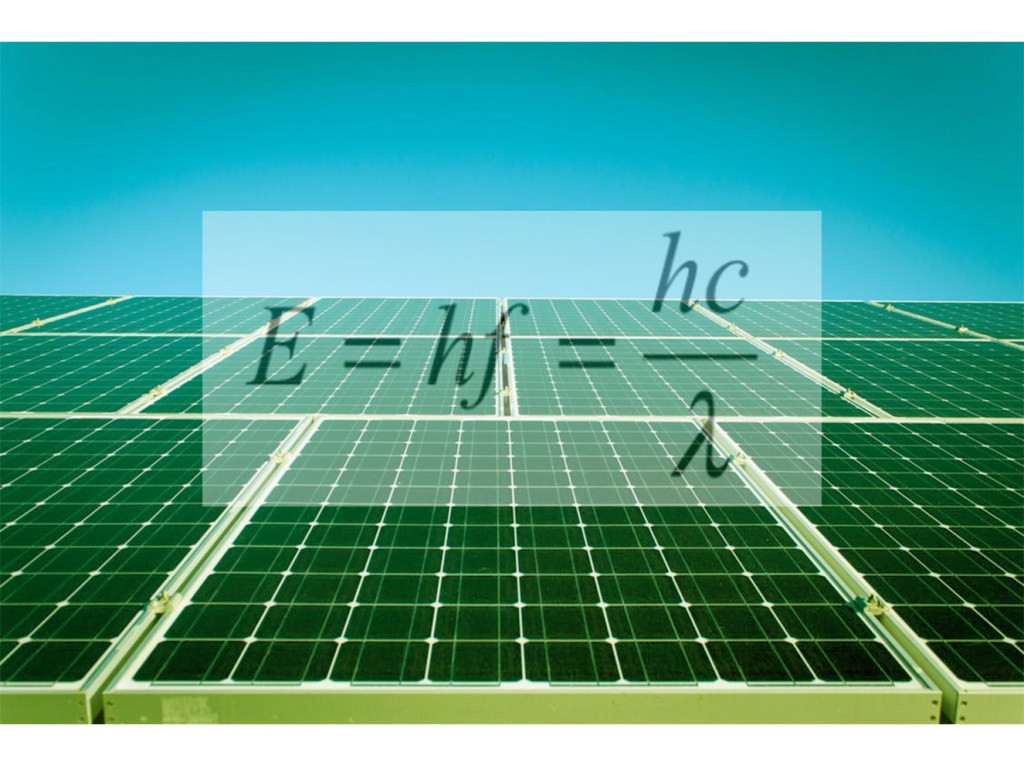
Solar Panels are made of tiny units called Solar Cells. These are made from Silicon, the second most abundant element on Earth. Solar Cells are comprised of tightly bonded Silicon atoms. We then put one layer of Negatively charged Silicon (N-Type, have extra electrons) on top of a layer of Positively charged Silicon (P-Type, have a extra space for electrons). When Photons from light hit the Silicon cells, electrons can be knocked away from Silicon and allowed to flow through a wire to create electricity. So if you have sunlight you can move electrons and make electricity.
The issue arises from unevenly distributed sunlight. Some areas of the world experience far more sun than others. So we can just put tons of solar cells in the sunny areas like deserts and power the whole world from that right? This would require effective storage, which is one of the main problems of Solar Energy. But it is possible to supply all of the world’s power with Solar Energy. The price will continue to drop and the efficiency of commercial Solar Panels (currently maxes out around 22%) will continue to rise. One really cool innovation is using mirrors to concentrate sunlight onto tiny areas of solar cells creating roughly 30% increases in efficiency.
This is basically the gist. Always remember, to make electricity you must first make electrons move. How you do this is either in a more direct or less direct way.
Luckily I had forced myself to investigate a year or two prior, so I could happily explain these energy processes to my sister. But the conversation quickly moved away from the area I had researched and once again, we were helpless at the base of a hard knowledge problem. I think we should all try a little harder to learn about the things that power modernity. Electricity and energy, computers and the internet, ecology and environmental processes like photosynthesis, food energy and nutrition, the timeline of Earth and humanity, the origins of language and social organization . Be curious about the simple things. How would you build a fire if lost in the woods, how do we build skyscrapers, how does an elevator or toilet work, what the hell is a mirror? These are the hard knowledge topics, and knowing them can make you appreciate the world around you a little more. Knowing them and actually using that knowledge to make stuff is so refreshing in the ocean of political and social discussion. Those are valuable too, but I get so tired of just talking all the time. Hard Knowledge is indisputable and objectivity can be a cold glass of water on a hot subjective day. It can be directly accessed to create. You can build your own computer, your own Solar Panel, your own fire, your own chair. Make a list of all the simple things you don’t understand but take for granted every single day. Move away from quick Google answers that you will need to look up again in a week or two. Google is amazing and we should take advantage of instant access, but slowing down to understand, especially the mechanics of everyday things, will cascade and build your fluid intelligence (ability to use creativity and reason to solve new problems). I think we need to talk less and make more. If something annoys you (politically, socially, personally) don’t complain, make.
Videos and Links I found helpful in writing this post:
SciShow: https://www.youtube.com/watch?v=4uPVZUTLAvA
How Coal Works:
http://www.ucsusa.org/clean_energy/coalvswind/brief_coal.html#.WezhJWXwE-I
 polymathematics
Leave a comment