
“The great enemy of clear language is insincerity.”
– George Orwell
“Perhaps it is a peculiarity of mine that despite the fact that I am a professional performer, it is true that I have always preferred playing without an audience.”
– Bill Evans
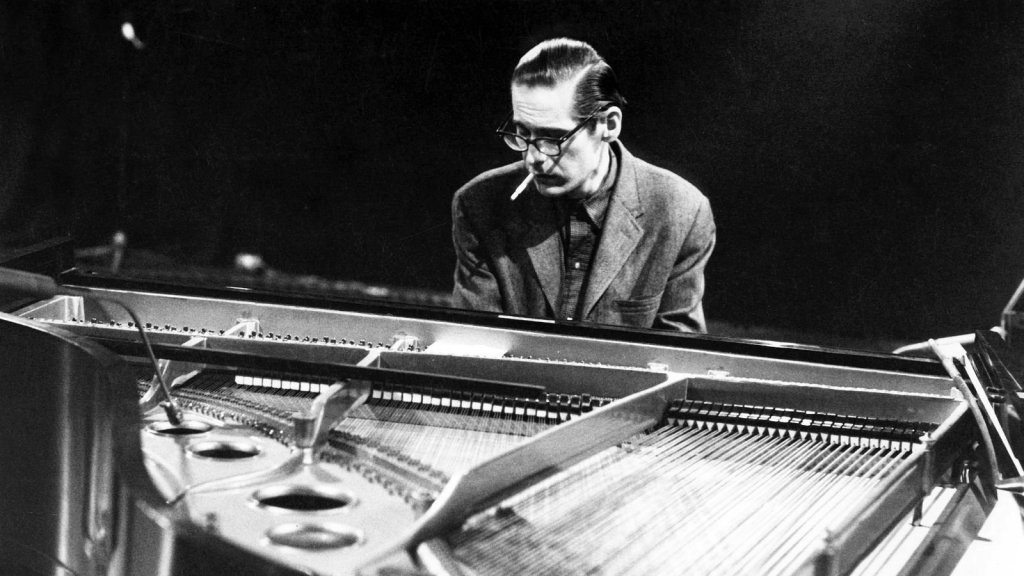
One of my favorite albums of all time is Bill Evans’ Conversations with Myself. It strikes me while listening and writing this that all good writing is essentially an ongoing conversation the writer has with themselves. All good art in fact, seems to be a comfort in talking to oneself on display. How else can I express something honest if I can’t ask myself what is true? See how I just did precisely that? These questions are in actuality just questions Jake is asking Jake.
So why write it down then, why not record it or speak it aloud in a comfy room? Another great question. I’m not really sure. It might be that writing is a forcing function for clarity. When I want to find out an intuition I have, what I really think about a topic, I can often just begin writing my thoughts as they happen and see the intuition come out onto the word processor. And speaking doesn’t have the same effect of linear traceability. Writing down what I am thinking shows me how poorly I often am, and allows me to begin to think better. This is why clear writing can expose absurdity that was surreptitiously tucked away in plain sight. And why Orwell said that “We have now sunk to a depth at which the restatement of the obvious is the first duty of intelligent men.” Because falseness is not obvious when you can’t go back and reread the wobbly fallacy bridging two foreign coasts. But on the page it is fat and awkward. You can lie to yourself in your head effortlessly, you do it in your sleep. Your brain connects the non sequiturs for you and short cuts to a conclusion that is agreeable. But in writing you can’t lie to yourself. It feels juvenile and feeble minded, obvious and insincere to keep in. Your logic is plainly brittle and you wouldn’t want to sign off on it. You see the record skipping and so do the readers. I told my brother once that the quickest way to write an essay is to avoid the truth. You can build a false argument so damn fast.
With this idea of not wanting to display poor thinking I begin to wonder not why I write but who I write for. There is great tension about who I write for. Firstly I think I write for myself as I have said. I write in order to think and discover thoughts and improve them. But of course writing is a social activity, a political post mortem, a reveal of sneaky activity, and presentation of facts, an entertainment. Writing is after all best read.
You get into trouble though when you write with or without the reader in mind. If I write with the reader in mind, I am changing my language and thus my thoughts for an imagined audience, I am being insincere. I think “Oh they might like this” or “What would sound more exciting? How can I get this shared more?” So that is the first kind of bad writing. The second is when I write without the reader in mind. The fields of academia, politics, philosophy, and generally verbose intellectuals are guilty of this. It’s why “plain” writing is so refreshing, perhaps even why we love Hemingway. The slogan of the readers who are forced to suffer this second type of bad writing is GET TO THE POINT! When I write without the reader in mind I am not disciplined enough, I assume they will know what I mean or feel what I feel, I show a disrespect for a reader’s time and mind. So in either case, weighing the reader too much or too little, the writing isn’t clear.
Bill Evans may not have liked my using jazz to illustrate an intellectual argument. He once said, “It bugs me when people try to analyze jazz as an intellectual theorem. It’s not. It’s feeling.” But that is kind of what I want to say, writing is allowing yourself to feel and think with yourself and sometimes publicly. The spirit of jazz is opening up and seeing what comes out. It is usually called improvisation but that isn’t really precise enough. It seems improvised because it happens so suddenly when done well, but those melodies were steeping inside for a long while before they came out. From one record you heard when you were fourteen, from a song you heard in an old film, from the millions of conversations and emotions that make up your life. I think so at least. This is how writing feels when I am doing it at my best. It is being deliberate enough to ask myself in writing one small question that I dare not ask in my head, and it is the interview with myself that follows. The conversation with myself.

 polymathematics
Leave a reply to This Blog Will Last a Lifetime – polymathematics Cancel reply