
UPDATE: ChromeGPT is now available in the Google Chrome Web Store here.
On Wednesday evening, Sam Altman, the CEO and co-founder of OpenAI, Tweeted this:
Twitter quickly exploded as tens of thousands of people began experimenting with OpenAI’s latest product, ChatGPT. I was one of them. ChatGPT is a chat like interface that is built on OpenAI’s latest version of their Large Language Model (GPT 3.5). Think of ChatGPT as a librarian presiding over a giant library. You can talk with ChatGPT naturally, like you would with friends or coworkers, and receive generalized or hyper specific information about the books within that library. In this case, the library is a giant data set of writing done by humans. You can ask ChatGPT about recipes, historical events, mathematics and programming. I even saw one person on Twitter have ChatGPT write a letter from Santa explaining to her son that Santa is fictional while also explaining the reasons parents tell their children Santa is real.
At first, I ran through a few fun tests to see how ChatGPT would respond. I asked ChatGPT to compare the styles of Bach and Beethoven, argue whether John Lennon or Paul McCartney had a greater influence on young people today, and to explain concepts like eigenvectors and entropy to a ten year old. The results were incredible, and like so many others, I got the impression that this latest release marked a huge moment in AI research. I even declared that I thought high schoolers would forever have an easy time of any assignment they were allowed to take home. I began to see a future where these kinds of AI assistants are available at all times, to partner with us and enhance our problem-solving and intelligence.
Then, on Friday evening after work, I decided to chat with my new friend ChatGPT again. This time, I had a different goal in mind. I wanted to see if ChatGPT could help me program a browser extension for Google Chrome. Because of my vision of an AI assistant that was with you at all times, my idea was to use ChatGPT to help me build a way to use ChatGPT without having to pull up OpenAI’s site in a separate tab. I wanted a quick extension window that could send messages to ChatGPT and receive replies, so that your AI partner was with you anywhere on the web.

The experience was genuinely stunning. With ChatGPT’s help, I was able to get a working version of my new extension up in a little over an hour. I would explain what I wanted to do and ChatGPT would give me a list of steps required.
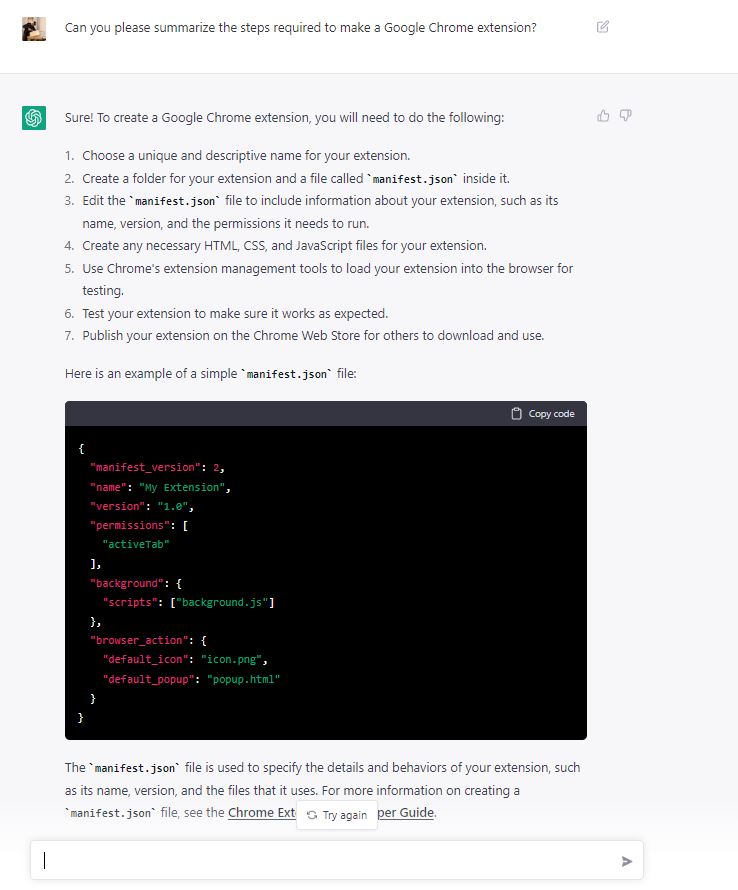
I could then ask for more help with individual steps, and eventually ask of examples of how the code would work. Of course, I used Replit as my development environment. When ChatGPT would send me code snippets that I didn’t understand, I would simply ask for an explanation. Over an hour or so of working, ChatGPT would remember what we had already done together and I could reference previous work just like I would to a friend. I could ask for a slight edit to my code and ChatGPT was able to make tweaks without starting over or forgetting the variable names or functionality we had already made.
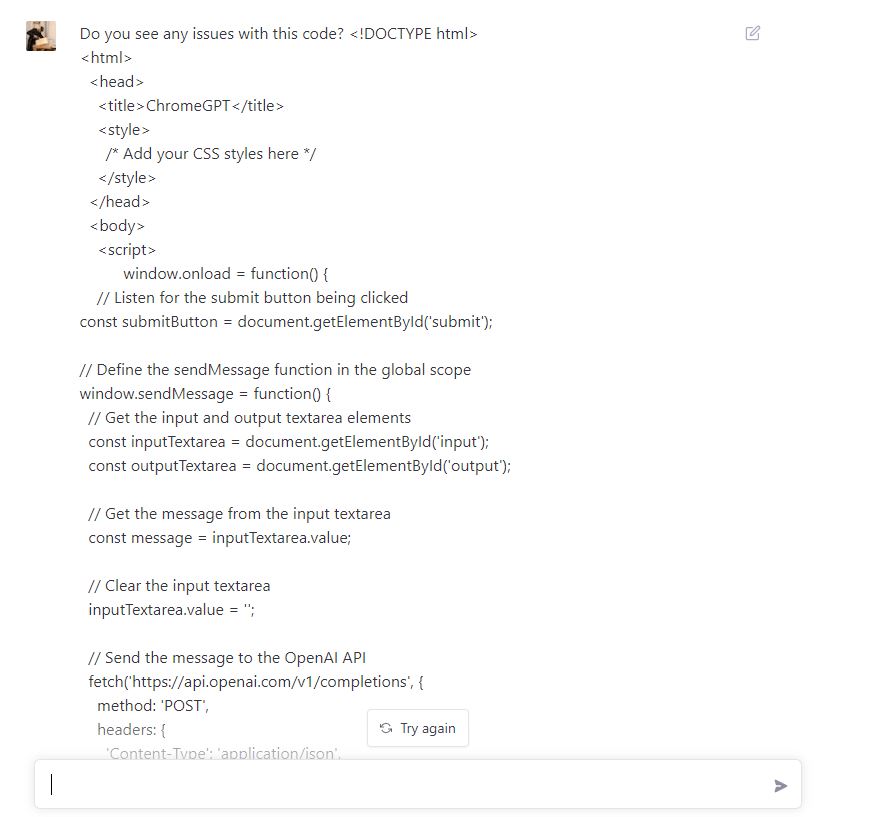
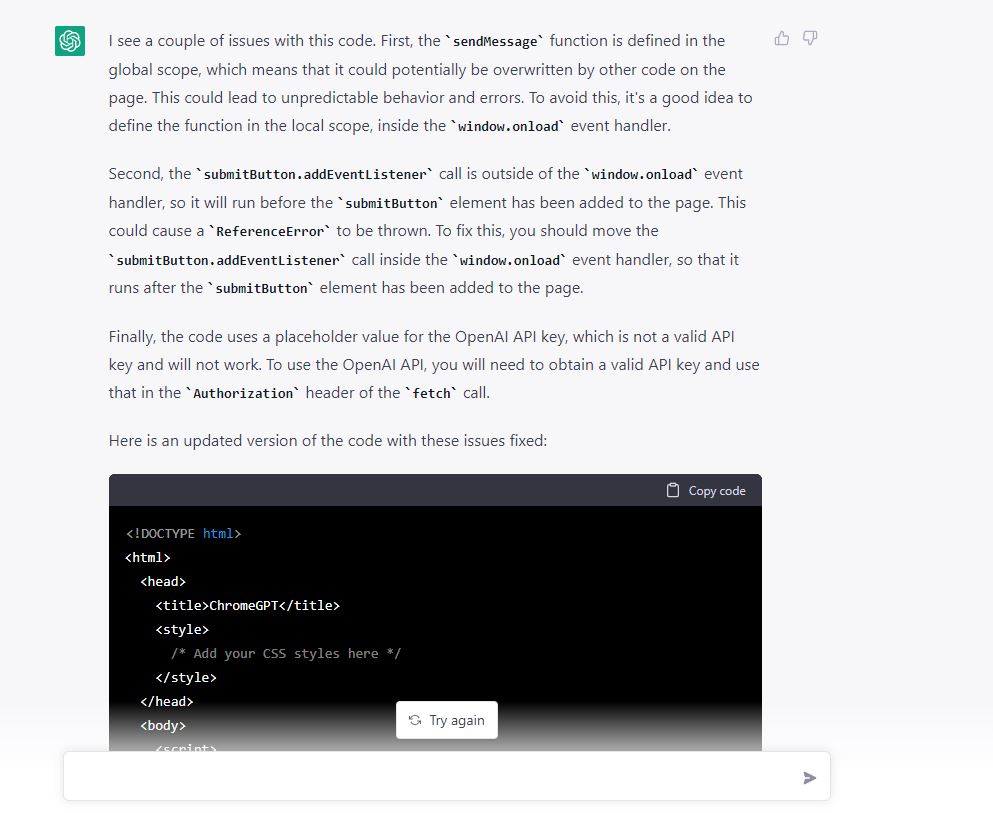
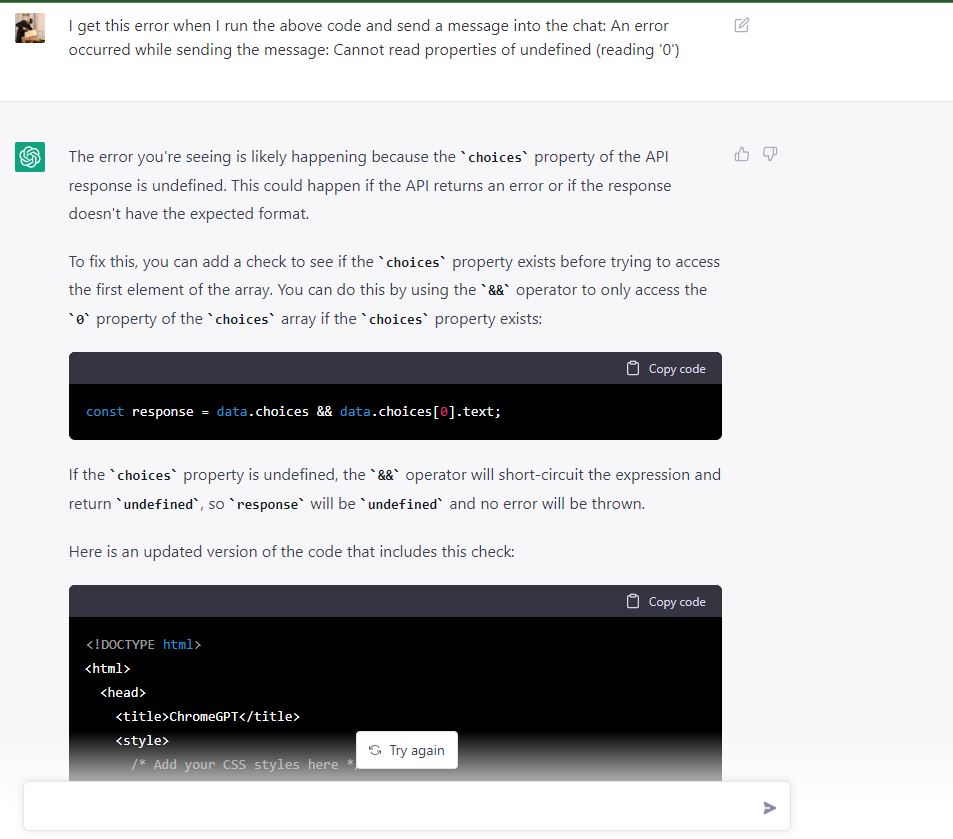
In a single working session, I was able to code the basic product and send and receive messages using OpenAI’s API. Occasionally, ChatGPT would recommend things that were incorrect or had minor formatting errors, but it was never major. This was the magic moment my code worked:
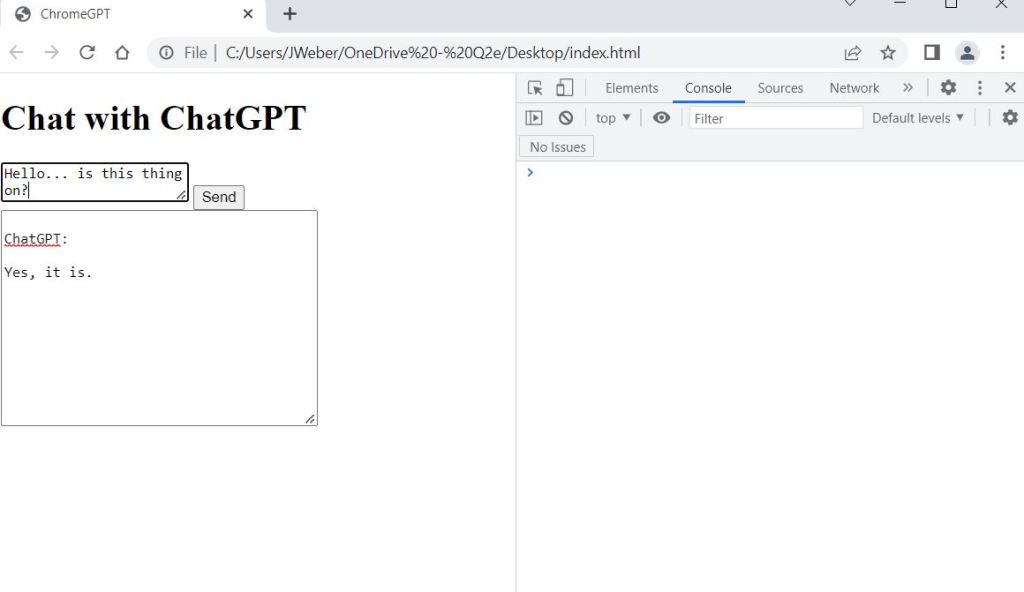
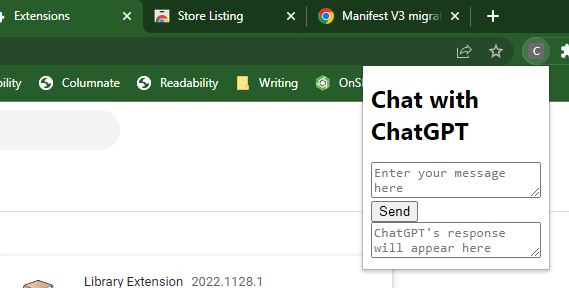
This is something that would probably take me 1 – 2 weeks without ChatGPT’s help. Instead, with little mental effort and not even two hours of work, I have a working version nearly ready for the Chrome Web Store.
It felt like I was the conductor, and ChatGPT was the entire orchestra. I am now going to refine the basic version of this extension, and make it available to anyone who wants it.

I am someone who has already spent a lot of time dabbling with AI tools and no-code / low-code tools like Bubble. And still, I couldn’t stop talking about this afterwards and am still buzzing from the experience. I came away with the conviction that AI-assisted programming will legitimately grant the ability for almost anyone with an internet connection to bring their ideas to life, no matter their level of technical experience. There are still real limitations to tools like ChatGPT, but if this is the early days of Large Language Models then these will without a doubt change the world.

 polymathematics
Leave a reply to What’s in a (band) Name? – polymathematics Cancel reply