
Many people have written about how making things can be valuable. What do I mean by “making things”? I am referring to what Paul Graham would call “a project of one’s own”. I don’t mean something as specific as building a chair (though that could certainly count) or as broad as “being creative” (though that is clearly a part of it). Making things is having an idea of your own about something cool you want to exist, and then pulling that idea into reality by the means available to you. A programmer often utilizes code for this, a musician utilizes a guitar or piano. The important aspect of “making things” is that there is an intention to get to a finish line. I spend many afternoons sitting with my guitar or piano, just humming along without the goal of writing a song. That isn’t the type of thing I mean when I say “making things”. But I also spend certain afternoons diligently reworking sentences to make a certain verse work with a specific melody I’ve created. That is an example of “making things”.
I’ve felt the joy of creativity more in the last year or so than most periods in my life, so I wanted to write about (and discover..?) what has been so special lately. I first started by brainstorming the common explanations of why making things can be so wonderful. Here are some of the most common explanations that I could recall:
- The process of solving problems is stimulating and has broader benefits outside of the project itself.
- The reward of completing projects helps build self-esteem and momentum in your life. The feedback loop of fulfilment leads to more motivation.
- There is a child-like joy you get from using your creativity. It is deeply playful and fun, plain and simple.
- It is fun to share things you make with friends, family, or a broader audience. It helps establish community, a sense of self, and provides a good signal about how your creative instincts and skillsets are received.
- You get to gain new skills from projects that involve areas outside of your comfort zone. If you set out to learn Python from scratch for the sake of adding it to your resume, you’d probably turn miserable after a week or two and give up. But if you were simply in pursuit of a playful creative idea you had that required some Python hacked together, you’d learn a bit of it and have a blast doing it. Learning on the job beats systematic approaches and it isn’t even close1.
I could go on, but won’t. I think that list is true. I relate to each of those ideas. But what else? Reflecting on that list I realized there is something different I’ve felt while working on side-projects that is a crucial part of the joy it generates.
When you set out to make something, you are in charge of every variable. Every project has nearly unbounded potential in the beginning, and it is up to you to impose constraints and make arbitrary decisions which you must justify on your own terms, as the independent owner of the world you are building. This process gradually turns the fuzzy infinite into a sharply defined piece of reality. The process of scoping a project, choosing what you will not have time to add, and deciding on the most important aspects of the thing you are making is a massively underrated skill. Try paying attention the next time you start working on something new; a flood of ideas will rush over you, creating dozens of tributaries potentially worth exploring. How you constrain the world (i.e. decide which tributaries to take) will ultimately determine how well you meet your own goals2. Even setting your own goals is an endeavor in constraint. If you choose to prioritize the wrong things, you will limit the upside before you even start. That process of constraining in order to create is important and valuable, and probably the aspect about making things that I enjoy most. Probably because it is the hardest part of making things.
Most of the above paragraph is written as if it describes some “serious” side-project, but it can also apply to a “silly” experiment or free spirited work of art. Paul Graham famously wrote about how some of the best startup ideas started out as “toys” hacked together by their curious inventors3. The challenge and joy of successfully adding constraints and thereby inventing something novel does not discriminate. The important part, as I’ve said above, is that there is some defined finish line when you can step back tilt your head and know you’ve made something that wouldn’t exist otherwise.

It also strikes me as I write that this process of scoping, constraining, and making crucial decisions provides a deep sense of purpose and agency many people feel like they don’t get from their day job. This source of joy echoes with the explanations about why so many people like being in the woods or camping alone. Everything depends on you and you alone, which can be exhilarating and empowering.
“Working on a project of your own is as different from ordinary work as skating is from walking. It’s more fun, but also much more productive.”
Paul Graham
In 2022, I spent a lot of time making things. I enjoyed tinkering, exploring, and attempting things beyond my skillset. I also enjoyed sharing them and hearing what other people think about them. 2022 was the first year I made things that real users got to use too, and the first year I made money from a product I built. That feels genuinely good! But the deeper sense of fulfilment I’ve found from it is more closely related to the independence and freedom to explore that making these projects from scratch has provided. Simply put: by making things I was genuinely curious about consistently, I showed myself that I can make things consistently. Most new ideas or early projects seem too large to fully wrap your head around before you start, and because of that we often give up. Once you learn from experience that you can constrain the idea and get started with something smaller, yet still real and useful, you are less likely to be intimidated by the vastness of your next idea.
Here is a list of the main things I worked on in 2022. Thanks to everyone who liked the posts, liked the Tweets, upvoted the products, used or bought them, or even simply checked them out. That sort of thing really does mean a lot to me.
- Printernet: your reading list, printed and mailed to you in a beautiful one of a kind magazine. This project has been my biggest all year and got the year started for me. It was the “largest” in scope and the one I took most seriously. It helped me discover and become comfortable with Bubble and other no-code tools and was also the first time I set up payment processing with Stripe. It made me my first ever “internet dollars”, was my first product launched on Product Hunt (upvoted by Ryan Hoover himself!), and is an idea that I wanted for myself which makes it extremely fulfilling to work on.
- Footprint: a little MVP tool to find other work by the writer whose work you are currently reading. I plan to make this better in 2023 and release it to the public. Expanded my programming skills by using Python for the first time and led to me finding Replit, which I enthusiastically endorse whenever I can! Works with Substack, Wired, the Atlantic, and WaPo currently.
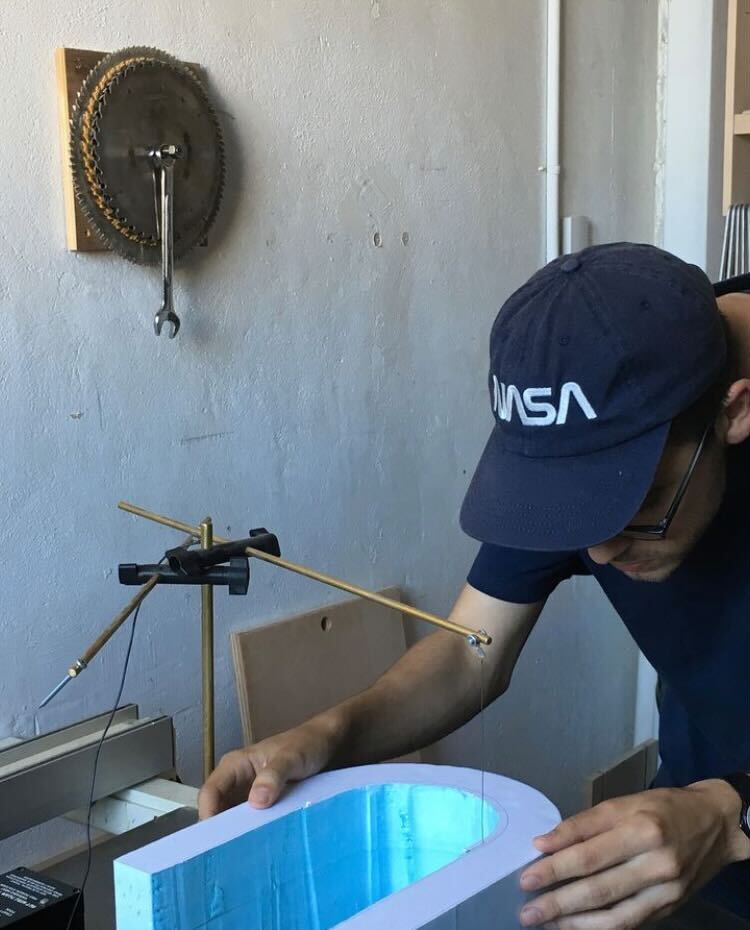
- Secret hardware + software project: Awesome freelance collaboration involving Arduinos and power tools. This project was great because we got a pretty nice version working in a single week when I expected it to take much longer. Hopefully can share some details in 2023 because the enitre project is insane.
- Remote Work Productivity Tool: I built a web app for myself to consolidate my work to-do lists, my calendar, and a timer for 20 minute “productivity sprints”. After sharing this one online, it led to 100+ waitlist sign ups and my first ever GitHub star! This was also my first open source project. Hopefully in the new year I can finish making this generally useful, because the version I made for myself is hardcoded for my own needs.
- Reading This: easily create a list of your current favorite reading recommendations and share them with one link. I wanted this for myself since I am always Tweeting out reading recs or posting about them on my blog. I thought building a Linktree for reading recs would be awesome. I also decided to build a page where you can view all the other recs users are making on Reading This — Tim Ferriss and Tyler Cowen’s reading recs are shared on Reading This now. This was my second project built with Bubble and my second product launched on Product Hunt. On Christmas day it was featured on Product Hunt and reached the #7 Product of the day (getting another upvote from Ryan Hoover!!). I found out the next day since I spent Christmas in the West Texas desert.
- ChromeGPT: my final project of the year was inspired by OpenAI’s release of ChatGPT. I wrote all about the process of building ChromeGPT here if you are interested. This project was awesome because there was tons of excitement for GPT based products when I launched it, building it demonstrated the power of GPT-3.5, and it led to me releasing my first ever Chrome Extension. It also introduced me to the future of programming as it was happening. ChromeGPT is available in the Chrome Web Store and already has 45 active weekly users! Again, making things and putting them into the world, into real people’s hands or onto real people’s computers, creates a wonderful flywheel of joy.
I hope to continue tinkering with these ideas and projects, and of course, create space for the next ones!
Footnotes
- This topic is probably worth exploring in a longer post.
- Even setting your own goals is an endeavor in constraint. If you choose to prioritize the wrong things, you will limit the upside before you even start.
- It took me too long to find the exact essay. I asked ChatGPT for help finding the essay I was thinking about and it was totally wrong. I eventually found it thanks to a recent Paul G tweet.
Photo credits:
Featured photo taken by Camilo
Photo in post taken by me

 polymathematics
Leave a reply to Polymathematics In One Breath – polymathematics Cancel reply